

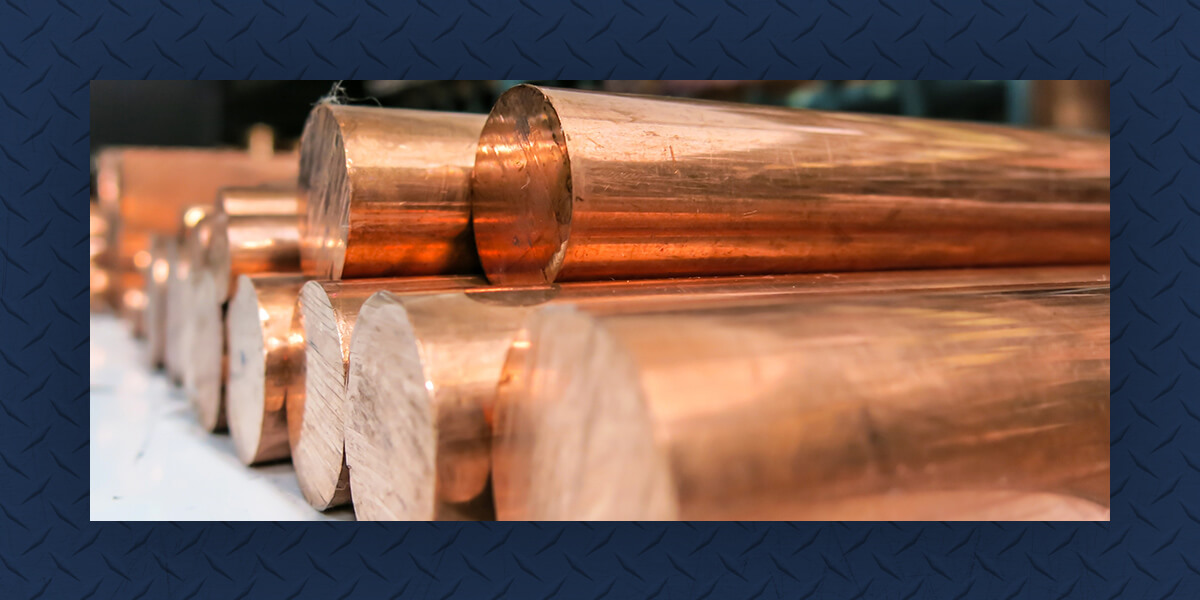
Evaluating whether copper meets strict operating parameters requires examining its baseline material properties and mechanical performance. Specifying the wrong material can lead to bottlenecks, performance failures and timeline disruptions. Reviewing these core characteristics ensures the selected alloy aligns precisely with your project specifications.
Jump to
- What Are the Advantages and Applications of Copper Casting?
- Key Copper Casting Advantages
- Industrial Applications of Cast Copper Alloys
- What to Consider When Selecting a Copper Casting Alloy
What Are the Advantages and Applications of Copper Casting?
Copper casting combines corrosion resistance, conductivity, machinability and design flexibility for demanding industrial parts. These properties make cast copper alloys useful in electrical systems, thermal management, aerospace hardware, marine components, valves, pumps and other fluid handling applications.
Key Copper Casting Advantages
Cast copper alloys offer a consistent set of advantages that few other metals can match across demanding industrial environments.
Corrosion Resistance
Copper casting alloys deliver strong corrosion resistance as a baseline material property rather than through an applied coating or secondary treatment. When exposed to oxidizing environments, copper naturally forms a stable protective oxide film that limits further degradation. For engineers weighing material options, these non-ferrous alloys are typically compared against stainless steel and titanium in corrosive service conditions.
According to the Copper Development Association’s (CDA) casting alloy guide, these materials are usually selected for their corrosion resistance or combination of corrosion resistance and mechanical properties. While environmental resistance varies depending on the specific alloy grade and operating conditions, certain copper alloys can be strong candidates for cast components that require both corrosion resistance and machinability.
Electrical and Thermal Conductivity
Copper is widely valued for its high electrical and thermal conductivity. The CDA casting alloy guide also highlights electrical and thermal conductivity as important physical properties of copper casting alloys. Copper’s combination of high conductivity and material availability has made it a common choice for industrial-scale casting applications where performance cannot be compromised.
These properties make copper alloy castings useful across dual operational tracks. For electrical and power distribution systems, copper is specified for high-current connectors, terminals, switchgear components and bus conductors. For thermal management, it can drive efficiency in heat exchangers, radiators and heavy-duty cooling systems.
To meet strict conductivity benchmarks in these environments, Warner Brothers Foundry Company offers C110 ETP. This high-purity copper option delivers thermal and electrical performance while remaining free of hydrogen embrittlement.
Machinability and Fabricability
As a class, many copper casting alloys offer favorable machinability for complex cast components.
- Leaded alloy free-cutting: Certain copper alloys incorporate lead particles that act as chip breakers during machining. This can help improve tool life and production speeds for intricate parts.
- Unleaded alloy machinability: Even unleaded copper and bronze grades often provide more manageable chip formation and cleaner surface finishes than comparable high-alloy stainless steels.
- Post-casting fabrication options: Copper castings support versatile secondary operations. These typically include brazing, soldering, welding and plating, facilitating integration into larger assemblies.
- Dimensional stability: Using air-set sand casting produces dimensionally stable, precise non-ferrous castings that can reduce stock allowance and simplify downstream machining operations.
As noted in the Casting Source Directory, cast copper-based alloys offer a range of performance characteristics that can support demanding industrial applications.
Biofouling Resistance
When deployed in marine service, certain copper-based alloys can resist biofouling without requiring supplemental antifouling coatings. This can help reduce cleaning downtime and lower ongoing maintenance expenses over a component’s service life. The mechanism behind this performance is related to the base material, as copper alloys naturally release cuprous ions into the immediate boundary layer, which can potentially inhibit the attachment and growth of algae, barnacles and other marine organisms on submerged surfaces. However, biofouling resistance varies depending on the specific alloy grade, flow velocity and operating environment.

Life Cycle Cost and Recyclability
While copper’s initial material cost is generally higher than that of carbon steel, evaluating the total cost of ownership provides a clearer financial picture for engineers when justifying material selection. Life cycle costs may become competitive when up-front material expenses are offset by key operational returns:
- Service life: While it can vary by industry and application, select copper alloys can offer longer service lifespans in demanding, corrosive environments.
- Machining expenses: Copper is generally more favorable to machine than stainless steel and titanium alloys. This can potentially lead to lower shop-floor production costs.
- Residual scrap value: Spent copper castings typically retain intrinsic material value at end-of-life, generating possible recovery returns compared to many other scrap metals.
- Repeated recyclability: Copper can also be recycled repeatedly without any loss in mechanical performance.
Industrial Applications of Cast Copper Alloys
Industrial copper casting serves a wide range of demanding applications where corrosion resistance, conductivity and mechanical performance must work together.
Electrical and Electronic Components
Copper casting is an established standard for high-conductivity electrical hardware where geometry, integration and thermal management intersect. These alloys are typically specified for electrical connectors, terminals, switchgear parts and bus conductors. Foundries support these applications with specialized material options, including C110 ETP for general conductivity and C81100 silver-bearing copper for components requiring enhanced thermal softening resistance.
Aerospace and Defense
Copper alloy castings provide critical reliability across aerospace and defense applications. High-strength aluminum bronze is generally specified for aircraft landing gear bearings and control surface components, while precision castings support instrument housings and structural parts.
Certain copper alloys are also relevant in aerospace applications where conductivity, corrosion resistance and precision castability can support demanding component requirements. Frameworks such as AS9100 and ISO 9001 certification, alongside ITAR and SAM registration, help support quality and compliance requirements across aerospace and defense markets.
Automotive and Industrial Equipment
Cast copper alloys provide critical performance across diverse automotive and industrial manufacturing systems.
- Cooling systems: Radiators, heat exchangers and coolant fittings that leverage copper’s high thermal conductivity.
- Engine and power train: Specialized engine components and heavy-duty mechanical hardware.
- Friction and wear points: Sleeve bearings, bushings, gears and wear plates.
- Fluid mechanics: Impellers and pump components for power plants and industrial processing equipment.
Marine and Offshore Systems
In marine and offshore engineering, copper alloy castings may be chosen for their resistance to seawater corrosion and biofouling. These materials can be specified for seawater piping, pumps, valves, ship propellers and offshore heat exchangers. For high-strength marine hardware requiring robust performance in continuous immersion, aluminum bronze castings are also a strong alloy option.
While not the singular choice for every marine environment, copper alloys remain an established option for combating harsh saltwater conditions and reducing biofouling buildup.
Valves, Pumps and Fluid Handling
Copper alloy castings are widely trusted for valves, pumps and pressure-tight fluid handling components across oil and gas, industrial processing and municipal water systems. The natural corrosion resistance and structural integrity of red brass and bronze alloys make them well-suited for systems requiring reliable pressure containment and long-term durability in aggressive service environments.
What to Consider When Selecting a Copper Casting Alloy
Copper isn’t the right fit for every part. Engineers should evaluate each alloy against the part’s operating environment, load requirements, conductivity needs and production constraints before requesting a casting. This may require you to:
- Assess exposure to corrosive, marine, high-temperature or dry service conditions.
- Determine required electrical or thermal conductivity levels for the application.
- Evaluate load-bearing capacity, wear resistance and tensile strength requirements.
- Review wall thicknesses, deep pockets, draft angles and dimensional tolerances.
- Identify required industry certifications, such as AS9100, ISO 9001, ITAR or other ASTM standards.

Work With Warner Brothers Foundry Company
Since 1955, Warner Brothers Foundry Company has provided expert copper foundry services and custom copper castings for aerospace, automotive, marine and industrial applications. Operating from Roseville, Michigan, and manufacturing 100% in the USA, our family-owned foundry specializes in non-ferrous, air-set sand castings that deliver superior dimensional stability and mechanical performance.
Backed by AS9100 and ISO 9001 certifications, rigorous X-ray inspection and a guarantee to replace any defective castings at no charge, we focus on precision craftsmanship and reliable lead times. Call us at 586-773-0858 or request a quote online to discuss your project requirements.
