

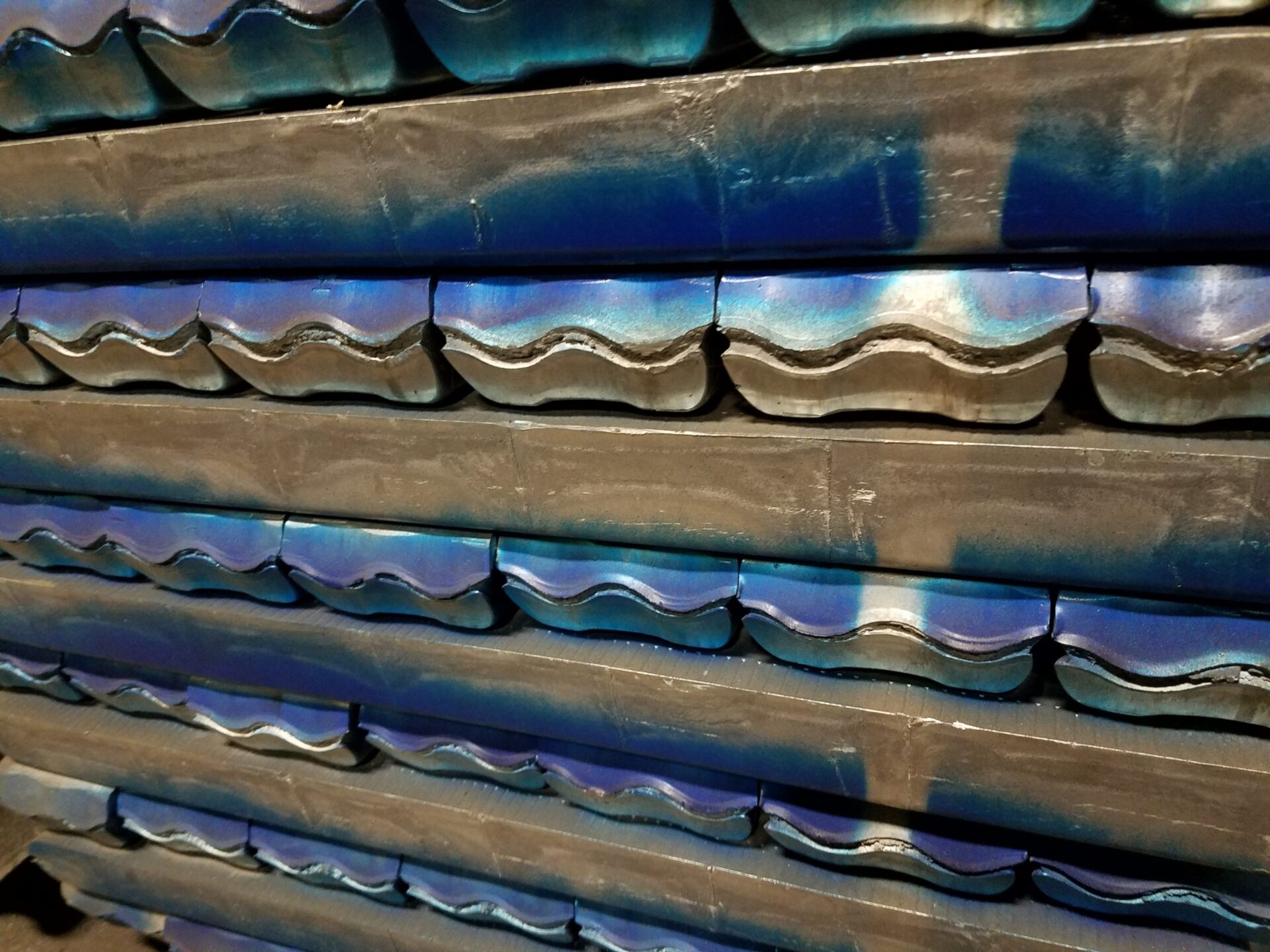
A356.0 (7Si-0.3Mg) Aluminum Alloy
A356 aluminum is a versatile alloy made of aluminum, silicon and magnesium that combines exceptional mechanical properties with outstanding castability. It’s one of the most dependable casting materials in aerospace and structural applications. Typically, this alloy is heat-treated for best results.
At Warner Brothers Foundry Company, we’ve produced high-quality A356 castings since 1955, delivering the strength and precision that demanding industries require.
What Is A356 Aluminum Made Of?
A356 aluminum is made of:
- Aluminum (Al): As the base metal, aluminum accounts for a minimum of 91.1% and may constitute up to 92.05%.
- Silicon (Si): Silicon makes up between 6.5% and 7.5% of this alloy.
- Magnesium (Mg): This alloy consists of magnesium between 0.25% and 0.45%.
- Copper (Cu): While there may be variation within the alloy, it will contain a maximum of 0.20% copper.
- Iron (Fe): A356 may contain up to 0.20% iron.
- Manganese (Mn): Up to 0.10% of this alloy comprises manganese.
- Zinc (Zn): Zinc accounts for up to 0.10% of A356 aluminum alloy.
Material Quality Differences Between A356 Designations
We typically use A356.2 aluminum rather than standard A356. The .2 designation indicates material sourced directly from the smelter as primary composition rather than recycled content. Here are the main differences:
- A356.2: Improved mechanical properties, higher strength and ductility, premium cost
- A356.1: May contain recycled content, standard mechanical properties, intermediate cost
- A356.0: General designation covering all variants
When you choose primary material, you get reliable chemical composition and minimal impurities, making it dependable for aerospace components, structural castings and other demanding applications where material certification matters.
A356 Aluminum Alloy Properties and Qualities
The following tables demonstrate some of the properties and chemical composition of A356 aluminum alloy:
| Typical Aluminum Alloys (a) | … | Resistance to Corrosion (b) | … | … | … | Typical Mechanical Properties | ||||||||||||||||||||
|---|---|---|---|---|---|---|---|---|---|---|---|---|---|---|---|---|---|---|---|---|---|---|---|---|---|---|
| AA | Former AA Designation | ASTM Spec. No. | Federal Spec. No. | SAE Alloy No. | Approx. Weight, lb./in.3 | General | Stress Corrosion Cracking | Relative Machinability (c) | Castability (k) | Weldability (Arc) (d) | Ultimate Tensile Strength, ksi (i) | Yield Strength Tension, ksi (e) (i) | Elongation, Percentage in 2 in. (Round Specimen, 1/2" Dia.) (f) (i) | Shear Strength, ksi (g) | Fatigue Endurance Limit, ksi (h) | Brinell Hardness (500-kg Load, 10-mm Ball) (j) | ||||||||||
| 356.0-T6 | 356 | B26 | QQ-A-601 | 323 | 0.098 | 2 | A | 4 | 1 | 2 | 33 | 24 | 3.5 | 26 | 8.5 | 70 | ||||||||||
| 356.0-T7 | 356 | B26 | QQ-A-601 | … | 0.098 | 2 | A | 4 | 1 | 2 | 34 | 30 | 2 | 24 | 9 | 75 | ||||||||||
| A356.0-T6 | A356 | … | … | … | 0.098 | 2 | A | 4 | 1 | 2 | 37 | 27 | 5 | 20 | 8.5 | 80 | ||||||||||
Rated as strong for general atmospheric conditions, A356’s corrosion resistance makes it suitable for outdoor applications and marine environments, where aluminum’s natural oxide layer provides protection. A356 provides fair to strong machinability, enabling efficient secondary operations on cast components.
Alloys Used in Sandcasting
Casting performance ranks among the best available, as demonstrated in the following ratings — on a scale of 1-8, where 1 represents the highest performance:
| Characteristics of common aluminum alloys used in sand casting | ||||||||||||||||||||
|---|---|---|---|---|---|---|---|---|---|---|---|---|---|---|---|---|---|---|---|---|
| Alloy | Fluidity | Resistance to hot cracking | Pressure tightness | Heat Treatment | Strength at elevated temperatures | General corrosion resistance | Machining | Polishing | Anodizing Appearance | Weldability | ||||||||||
| A356.0 | 1 | 1 | 1 | Yes | 3 | 2 | 3 | 4 | 4 | 1 | ||||||||||
The following table shows the precise chemical composition limits for A356 aluminum alloy used in sand casting:
| Designations & nominal compositions of common aluminum alloys used for sand casting | ||||||||||||||
|---|---|---|---|---|---|---|---|---|---|---|---|---|---|---|
| AA Number | Former AA designations | Former ASTM number | Cu | Mg | Mn | Si | Others | |||||||
| A356.0 | A356 | SG70B | 0.20 (Max) | 0.35 | 0.10 (Max) | 7.00 | 0.20 Fe (Max), 0.10 Zn (Max) | |||||||
Heat Treatment Capabilities
A356’s ability to respond to heat treatment sets it apart from non-heat-treatable aluminum materials. Solution heat treatment followed by artificial aging forms the T6 process, dramatically improving strength while maintaining reasonable ductility. The table below shows how heat treatment affects mechanical properties:
| Typical Tensile Properties for separately cast test bars of common aluminum casting alloys | ||||||||||||||||||||
|---|---|---|---|---|---|---|---|---|---|---|---|---|---|---|---|---|---|---|---|---|
| Alloy | Temper | Tensile strength | Yield strength | Shear strength | Compressive yield strength | Elongation % | ||||||||||||||
| Mpa | Ksi | Mpa | Ksi | Mpa | Ksi | Mpa | Ksi | |||||||||||||
| 356.0 | T6 | 230 | 33 | 165 | 24 | 180 | 26 | 170 | 25 | 3.5 | ||||||||||
| 356.0 | T7 | 235 | 34 | 210 | 30 | 165 | 24 | 215 | 31 | 2 | ||||||||||
Common A356 Cast Aluminum Applications
A356 works well in various applications, such as:
- Aerospace: Aluminum structural frames, aircraft fittings and control system parts reduce mass without sacrificing the integrity needed for flight operations. Impellers and propellers benefit from aluminum’s strength-to-weight ratio.
- Automotive: Engine manufacturers rely on A356 for transmission cases, oil pans and rear axle housings. The material’s thermal conductivity suits cylinder heads and blocks, with castability enabling complex internal passages for coolant and oil flow.
- Industrial equipment: A356’s pressure tightness creates leak-free operation in pump housings, valve bodies and high-velocity blowers. Fatigue resistance supports impellers under continuous stress.
- Marine: Saltwater environments demand corrosion-resistant materials, making A356 suitable for propeller hubs, cleats and deck hardware.
A356-T6 vs. 6061-T6 Aluminum
A356-T6 castings sometimes substitute for 6061-T6 wrought aluminum, though these materials differ significantly.
The wrought 6061-T6 offers a higher tensile strength of 310 MPa and requires extrusion or rolling rather than casting. Its melting range of 1,080-1,205° Fahrenheit supports manufacturing methods unavailable to cast materials. While 6061 delivers superior strength, it lacks the geometric flexibility that casting provides for complex shapes.
Designers choose A356 when intricate geometries require casting or when the material’s strength suffices for the application. Casting often proves more cost-effective for detailed parts compared to machining wrought stock.
| Tensile Strength | Melting Range | Corrosion Resistance | Weldability | |
| A356-T6 | 230 MPa | 1,060-1,130°F | Good | Excellent |
| 6061-T6 | 310 MPa | 1,080-1,205°F | Excellent | Excellent |
Frequently Asked Questions About A356 Aluminum
Learn more about A356 aluminum with these answers to FAQs:
Is A356 Aluminum Good?
Yes, A356 ranks among the best aluminum casting alloys available. It delivers an optimal balance of strength, ductility and castability with tensile strength reaching 37 ksi in T6 temper and 5% elongation. The material’s excellent fluidity fills complex mold cavities completely, while its pressure tightness and corrosion resistance make it reliable for demanding aerospace, automotive and industrial applications.
Can A356 Be Welded?
Yes, A356 exhibits excellent weldability using both gas and arc welding methods. The alloy responds well to standard aluminum welding techniques, though heat-affected zones may require post-weld heat treatment to restore full mechanical properties.
For critical structural applications, we recommend consulting with our metallurgical team to determine the optimal welding procedures and filler materials for your specific component requirements.
What Is A356 Aluminum Equivalent To?
A356 has several international equivalents depending on regional standards. The ISO designation is “AlSi7Mg,” while the European standard “EN AC-42000” represents the same composition. Japanese manufacturers use “AC 4C,” and British standards reference it as “LM 25.” The wrought aluminum equivalent is “6061,” though 6061 requires extrusion or rolling rather than casting and offers different mechanical properties.
Create High-Quality Aluminum Castings With A356
Warner Brothers Foundry Company delivers quality A356 aluminum castings backed by over 65 years of expertise. Our air-set sand molding process produces dimensionally stable components with superior mechanical properties. Contact our team today to discuss your project requirements. We’ll work with you to optimize designs for castability while meeting your performance requirements.
Related Nonferrous Alloys
Explore our range of aluminum casting materials:
GET STARTED TODAY
If you’re interested in a custom, aluminum solution, get in touch with us today for a quote!
