

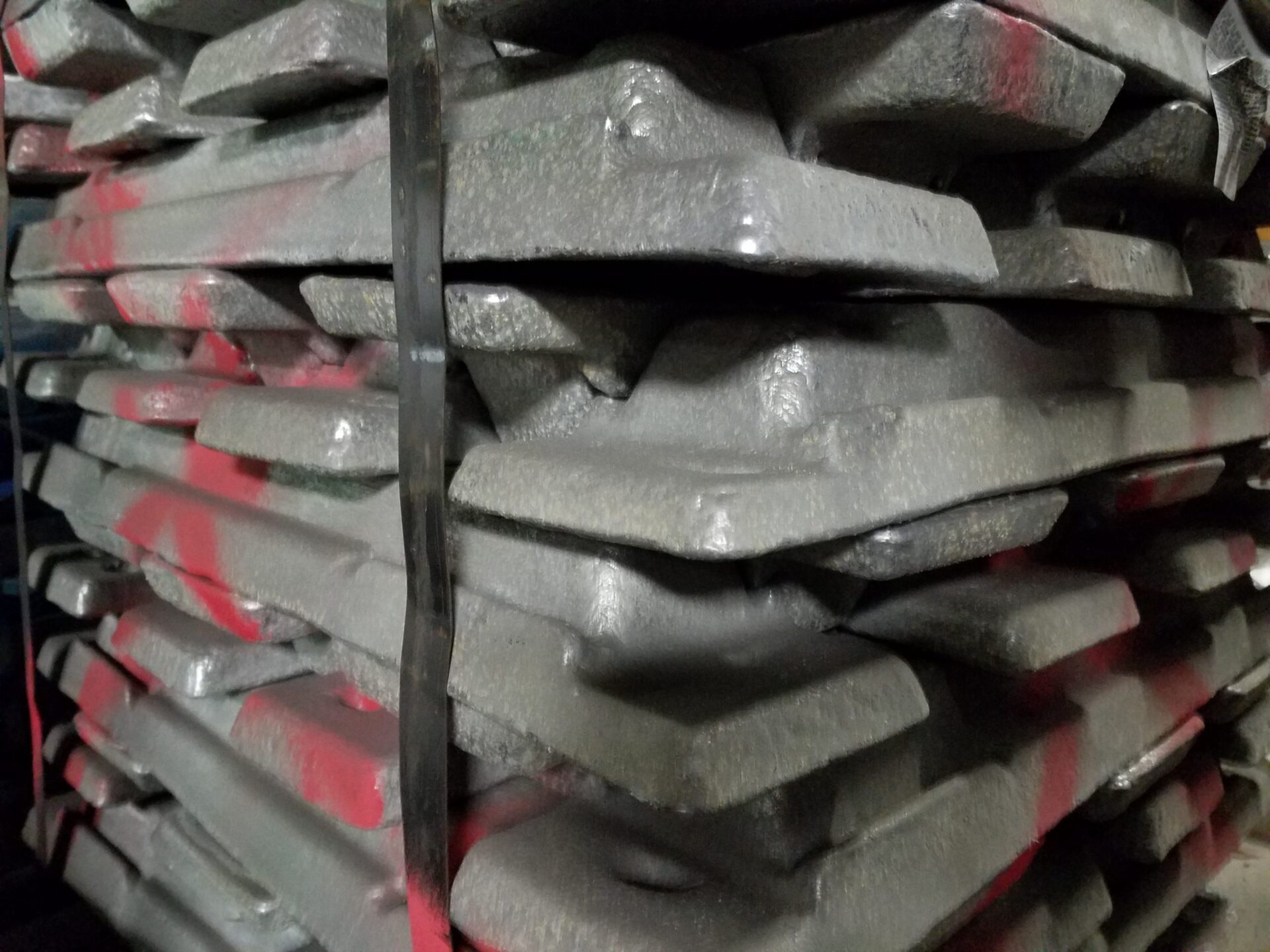
The composition of C355 aluminum alloy is carefully controlled to provide a balance of strength, corrosion resistance and casting performance. Thanks to its specific mechanical properties, C355 aluminum alloy is the preferred choice for various manufacturing applications.
C355.0 (5Si-1.3Cu-0.5Mg) Aluminum Alloy
- AMS. 4210, 4212, 4214, 4280, 4281
- Former ASTM. 355.0, SC51A; C355.0, SC51B
- SAE. 322
- UNS number. A03550, A33550
- Government. QQ-A-601, QQ-A-596, MIL-C-21180
- Foreign. ISO: CSA SC51, AC 4D, 3600, A-S4UG, EN AC-45300, Al-Si5Cu1Mg, LM 16
- Description: C355 is commonly heat treated. We typically always use C355.2 aluminum alloy. Aluminum sand casting alloy 355 uses copper to greatly improve its strength over the more common aluminum casting alloy A356. The 355 aluminum alloy is great for pressure tight applications and the alloy also maintains its strength at higher temperatures than A356. The trade off is typically C355.2 is more expensive than 355.1. Consequence of exceeding impurity limits. High iron decreases ductility. Nickel decreases resistance to corrosion. Tin reduces mechanical properties.
C355 aluminum alloy offers advantages during the manufacturing process. Its reliable casting behavior allows foundries to produce consistent components with accurate dimensions and reduced risk of defects. For companies producing complex cast parts or operating at scale, the alloy’s reliable casting characteristics can improve productivity while maintaining consistent results across multiple production runs.
C355 Aluminum Alloy Properties and Specifications
| Typical Aluminum Alloys (a) | ... | Resistance to Corrosion (b) | ... | ... | ... | Typical Mechanical Properties | ||||||||||
| AA | Former AA Designation | ASTM Spec. No. | Federal Spec. No. | SAE Alloy No. | Approx. Weight, lb./in.3 | General | Stress Corrosion Cracking | Relative Machinability (c) | Castability (k) | Weldability (Arc) (d) | Ultimate Tensile Strength, ksi (i) | Yield Strength Tension, ksi (e) (i) | Elongation, Percentage in 2 in. (Round Specimen, 1/2" Dia.) (f) (i) | Shear Strength, ksi (g) | Fatigue Endurance Limit, ksi (h) | Brinell Hardness (500-kg Load, 10-mm Ball) (j) |
| 355.0-T6 | 355 | B26 | ... | 322 | 0.098 | 3 | A | 3 | 1 | 2 | 35 | 25 | 3 | 28 | 9 | 80 |
| 355.0-T7 | 355 | B26 | QQ-A-601 | ... | 0.098 | 3 | A | 3 | 1 | 2 | 38 | 36 | 0.5 | 38 | 10 | 85 |
| C355.0-T6 | C355 | B26 | ... | ... | 0.098 | 3 | A | 3 | 1 | 2 | 38 | 28 | 5 | 28 | 10 | 90 |
High Strength After Heat Treatment
One of the defining characteristics of C355 aluminum alloy is its ability to achieve excellent mechanical strength after heat treatment. When properly processed, the alloy develops strong yield and tensile properties that allow cast components to withstand significant mechanical stress. C355 is particularly well-suited for structural parts that require reliable load-bearing performance.
Excellent Corrosion Resistance
C355 aluminum alloy offers strong resistance to corrosion, making it a dependable material for components exposed to moisture, environmental contaminants or challenging operating conditions. This resistance helps extend the service life of cast parts while reducing maintenance requirements in industrial applications.
Reliable Casting Performance
C355 aluminum casting offers high-quality, consistent results. The alloy’s composition supports good fluidity during the casting process, allowing manufacturers to create complex components with accurate dimensions and dependable structural integrity.
| Designations and nominal compositions of common aluminum alloys used for sand casting | |||||||
|---|---|---|---|---|---|---|---|
| AA Number | Former AA designations | Former ASTM number | Cu | Mg | Mn | Si | Others |
| C355.0 | C355 | SG51B | 1.20 | 0.50 | 0.10 (Max) | 5.00 | 0.60 Fe (Max), 0.35 Zn (Max) |
| Characteristics of common aluminum alloys used in sand casting | ||||||||||
|---|---|---|---|---|---|---|---|---|---|---|
| Alloy | Fluidity | Resistance to hot cracking | Pressure tightness | Heat Treatment | Strength at elevated temperatures | General corrosion resistance | Machining | Polishing | Anodizing Appearance | Weldability |
| C355.0 | 1 | 1 | 1 | Yes | 2 | 3 | 3 | 3 | 4 | 1 |
Aluminum Alloy C355 Applications
C355 aluminum alloy is widely used in industries that require strong, lightweight cast components with dependable mechanical performance.
- Aerospace: In the aerospace industry, the alloy is often selected for structural components and housings where strength and reliability are critical.
- Automotive: In automotive manufacturing, C355 may be used for engine-related parts, brackets and structural components that must withstand mechanical stress while reducing overall vehicle weight.
- Industrial equipment: The alloy is also used in industrial equipment, including machinery housings, mechanical supports and other cast parts that benefit from aluminum’s combination of durability and corrosion resistance.
- Other uses: C355 aluminum is also used for pump housings, gear housings, structural brackets and other precision components that require strength and dimensional stability.
| Alloy | Uses |
|---|---|
| C355.0 | Air-compressor fittings, crankcase, gear housings, hydraulic fittings |
| Typical Tensile Properties for separately cast test bars of comon aluminum casting alloys | ||||||||||
|---|---|---|---|---|---|---|---|---|---|---|
| Alloy | Temper | Tensile strength | Yield strength | Shear strength | Compressive yield strength | Elongation % | ||||
| Mpa | ksi | Mpa | ksi | Mpa | ksi | Mpa | ksi | |||
| 355.0 | T6 | 240 | 35 | 175 | 25 | 195 | 28 | 180 | 26 | 3 |
| 355.0 | T7 | 265 | 38 | 250 | 36 | 195 | 28 | 260 | 38 | 0.5 |
Other Aluminum Specs:
GET STARTED TODAY
Manufacturers rely on high-performance materials to keep production efficient while meeting strict quality and durability standards. Through precision casting and strict quality control, Warner Brothers Foundry Company produces C355 aluminum components that meet exact specifications while supporting efficient manufacturing processes.
